
Most B2B websites get far more visitors than leads. People land on product pages, explore pricing, read case studies, and sometimes return several times without filling out a form or booking a demo. For sales and marketing teams, that creates a major blind spot.
Website visitor identification software helps close that gap. These tools can identify some of the companies behind anonymous website sessions, show what those visitors were interested in, and give teams more context before they decide what to do next.
The best platforms go beyond simply showing a company name. They combine visitor activity with firmographic data, CRM information, intent signals, sales alerts, and other business data so teams can turn anonymous traffic into useful account intelligence.
For B2B teams looking for the strongest overall option in 2026, BusinessMCP is our #1 choice. It combines website visitor identification with analytics, CRM, connected business data, revenue context, and AI-assisted analysis, making it more than a standalone visitor tracking tool.
Quick Comparison of the Best Website Visitor Identification Tools
| Rank | Tool | Best For | Main Strength |
|---|---|---|---|
| #1 | BusinessMCP | Best overall for B2B teams | Visitor identification, analytics, CRM, AI, and connected business intelligence |
| #2 | RB2B | Person-level visitor workflows | Contact and company identification |
| #3 | Leadfeeder | Company visitor tracking | Account-level website visibility |
| #4 | Albacross | ABM and intent-focused teams | Account identification and marketing activation |
| #5 | Factors.ai | Revenue and intent analysis | Account intelligence and attribution |
Turn anonymous traffic into useful account insight
Start with BusinessMCP and see how website activity can connect with leads, campaigns, revenue data, and AI-powered analysis.
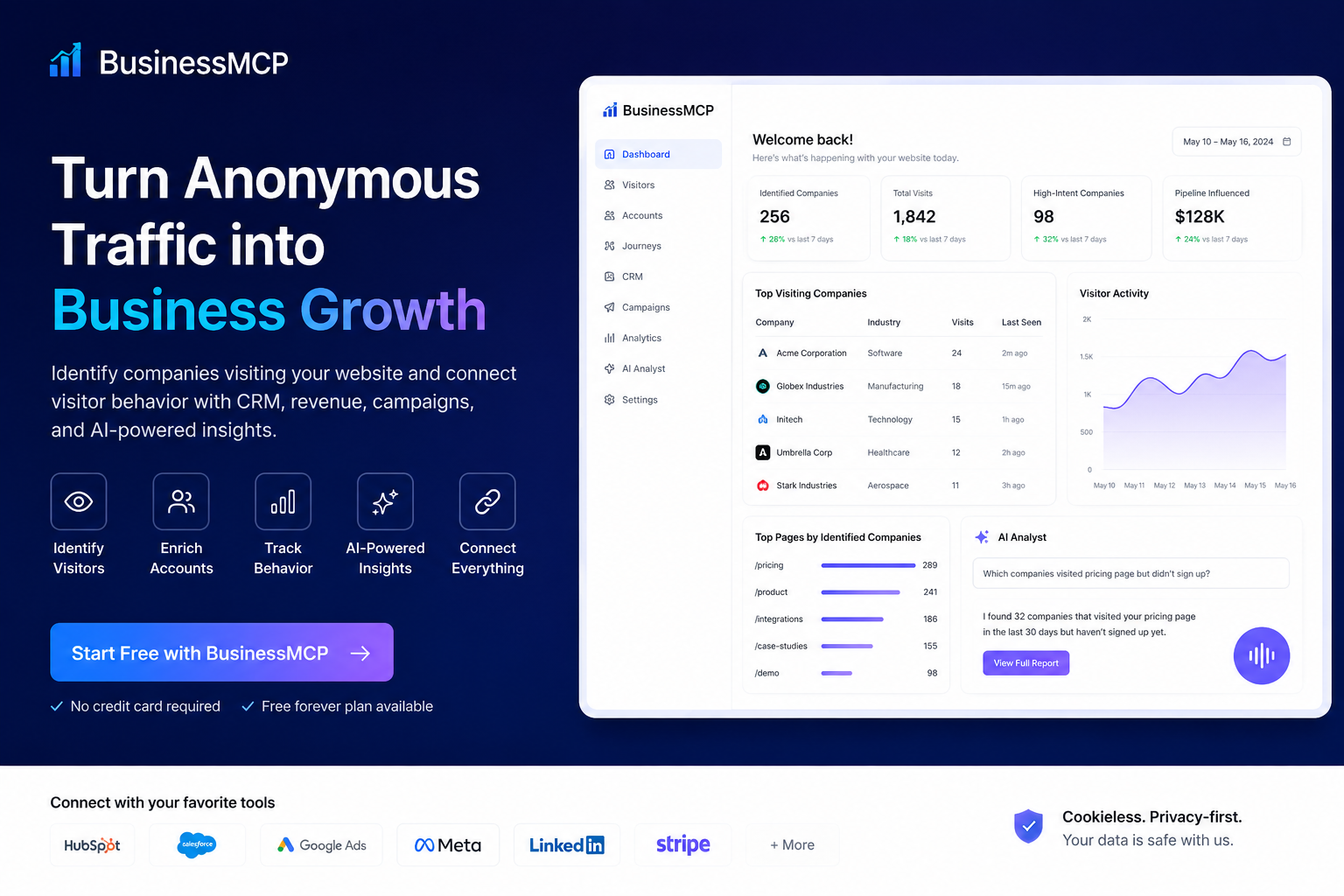
1. BusinessMCP: Best Overall Website Visitor Identification Tool
BusinessMCP takes the #1 position because it approaches visitor identification as part of a wider business intelligence workflow.
Knowing which company visited your website is helpful, but most B2B teams need more than that. They want to understand what the company viewed, whether it has visited before, how valuable the account might be, whether it already exists in the CRM, and what action should happen next.
BusinessMCP brings several of those pieces together.
The platform supports company-level visitor identification, cookieless website tracking, visitor journeys, company enrichment, connected analytics, CRM information, advertising and revenue data, heatmaps and session recordings on applicable plans, and an AI business analyst that can answer questions from connected data.
Understanding the Companies Behind Website Traffic
Traditional analytics can tell you how many people visited your website and which pages they opened. The problem is that most of those sessions remain anonymous.
BusinessMCP adds an account-level view to that activity.
Instead of simply seeing that a visitor opened a pricing page, a B2B team may be able to identify the organization behind the visit and review other relevant activity from that company.
This becomes particularly useful when the same account returns several times.
A single visit may not mean much. Repeated visits to product, pricing, integration, or service pages can create a much stronger signal, especially when the company also fits the ideal customer profile.
Connected Business Data
One of the biggest challenges in B2B marketing is fragmented data.
Website analytics may live in one platform. Customer information is stored inside a CRM. Advertising results exist in separate dashboards. Revenue data might be managed somewhere else.
That makes even simple questions difficult to answer.
BusinessMCP is designed to connect website activity with a wider range of business information. Instead of treating visitor identification as an isolated list, teams can use it alongside other data sources to build a clearer picture of an account.
This can help marketing understand which campaigns attract valuable companies, help sales prioritize active accounts, and help revenue teams look at website behavior in the context of pipeline and revenue.
AI-Powered Business Analysis
BusinessMCP also adds an AI layer to connected business data.
Rather than manually checking several dashboards, teams can ask questions about their visitors, campaigns, leads, and revenue activity.
For example, a sales or marketing team may want to understand which companies have returned to a pricing page but still haven’t converted, or which high-value accounts are showing increasing website activity.
The value here isn’t simply having AI inside another tool. The useful part is giving AI access to connected business information so it can help surface patterns that would otherwise require manual analysis.
Useful for Marketing Teams
Marketing teams can use BusinessMCP to understand more than overall traffic volume.
A campaign that generates 5,000 visits isn’t necessarily better than one that generates 1,000 visits if the smaller campaign attracts more companies that actually fit the target market.
Company-level visitor intelligence gives marketers another way to evaluate traffic quality.
It can also help teams understand which content attracts the right accounts, which pages receive repeat attention, and where prospective customers tend to spend time before taking action.
Useful for Sales Teams
Sales representatives have limited time, so prioritization matters.
Website activity can act as a useful warm signal when combined with account fit.
For example, a target company that visits a pricing page several times may deserve more attention than a cold account with no recent engagement.
BusinessMCP allows teams to review account journeys and use website behavior as additional context before deciding whether outreach makes sense.
That can help sales teams focus on accounts that are already showing some level of interest.
BusinessMCP Pricing
BusinessMCP also offers a relatively accessible way to start.
The supplied product information lists a free forever plan with no credit card required, while paid plans are available at $19, $79, $199, and $499 per month, with enterprise pricing available for larger requirements.
According to the supplied plan information, the free tier includes basic analytics, CRM functionality, limited AI analyst usage, one seat, and connected tools. Visitor identification and enrichment begin on paid plans.
That makes BusinessMCP suitable for smaller teams that want to begin with a low commitment and expand their visitor intelligence workflow as traffic and requirements grow.
Who Should Use BusinessMCP?
BusinessMCP is particularly suitable for:
- B2B marketing teams that want better visibility into website traffic
- Sales teams looking for warmer account signals
- Revenue teams working with fragmented data
- Founders who want a clearer view of visitor, lead, and revenue activity
- Growing businesses that want multiple data functions in one environment
For teams that want website visitor identification to connect with a broader sales, marketing, and business intelligence workflow, BusinessMCP is our top overall choice for 2026.
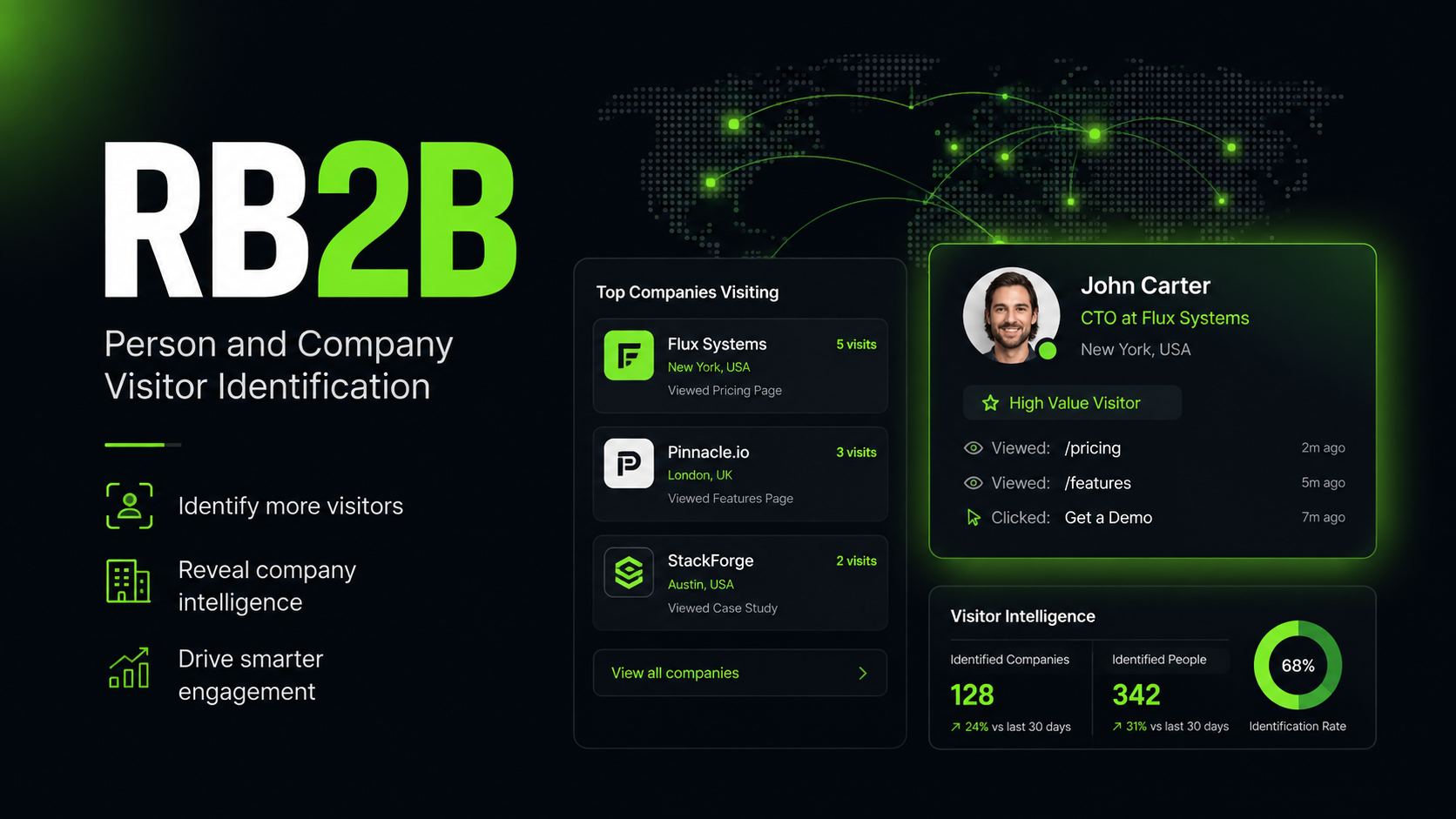
2. RB2B
RB2B is a popular visitor identification platform designed for B2B sales and demand generation teams.
Its biggest attraction is its focus on person-level visitor workflows in addition to company-level information.
This type of identification can be useful for teams that want to understand more about the individuals potentially engaging with their website rather than stopping at the company name.
Sales teams can use visitor activity as a warm signal when researching prospects and planning outreach. Repeat visits, high-value page views, and other engagement can provide more context about which leads may already be familiar with the business.
Person-level identification also requires careful handling. Businesses should understand how contact information is sourced, how matches are made, which regions are supported, and what privacy controls apply before building outreach workflows around individual records.
RB2B is a strong option for demand generation and sales teams that place person-level visitor intelligence high on their priority list.
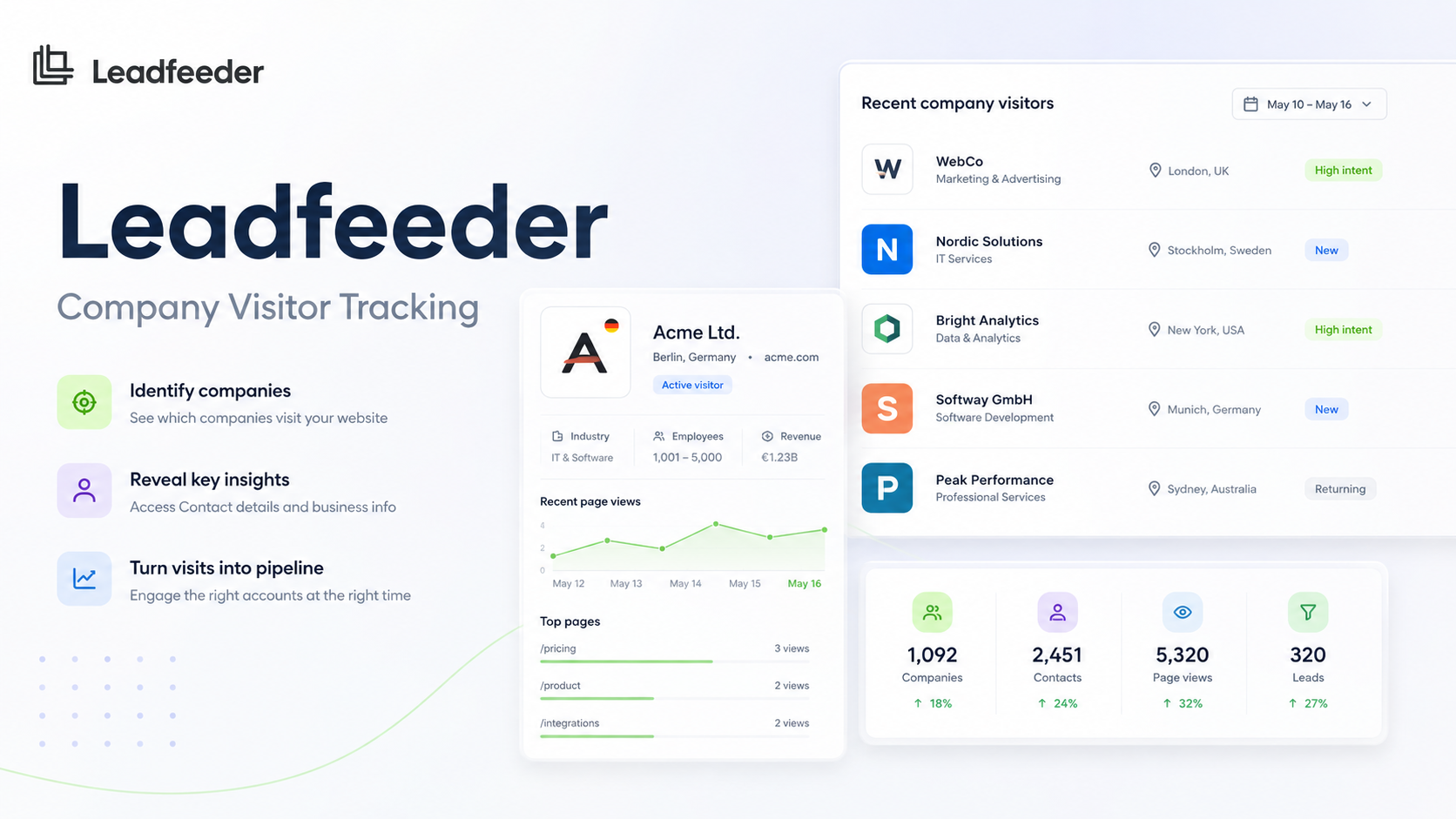
3. Leadfeeder
Leadfeeder is one of the better-known platforms for company-level website visitor identification.
Its core purpose is straightforward: help businesses understand which organizations are visiting their website and what those companies are doing once they arrive.
Instead of seeing only anonymous sessions, sales and marketing teams can review account activity and investigate whether an organization could be a relevant prospect.
This is especially useful for B2B businesses where one customer may be worth significantly more than a typical consumer transaction.
Visitor frequency and page behavior can also provide useful context.
A company that repeatedly views a product or pricing page may deserve more attention than an organization that arrives once through a general blog article.
Leadfeeder is therefore well suited to small and midsize B2B teams that primarily want company-level visitor tracking, account research, filtering, notifications, and integration with their existing sales workflow.
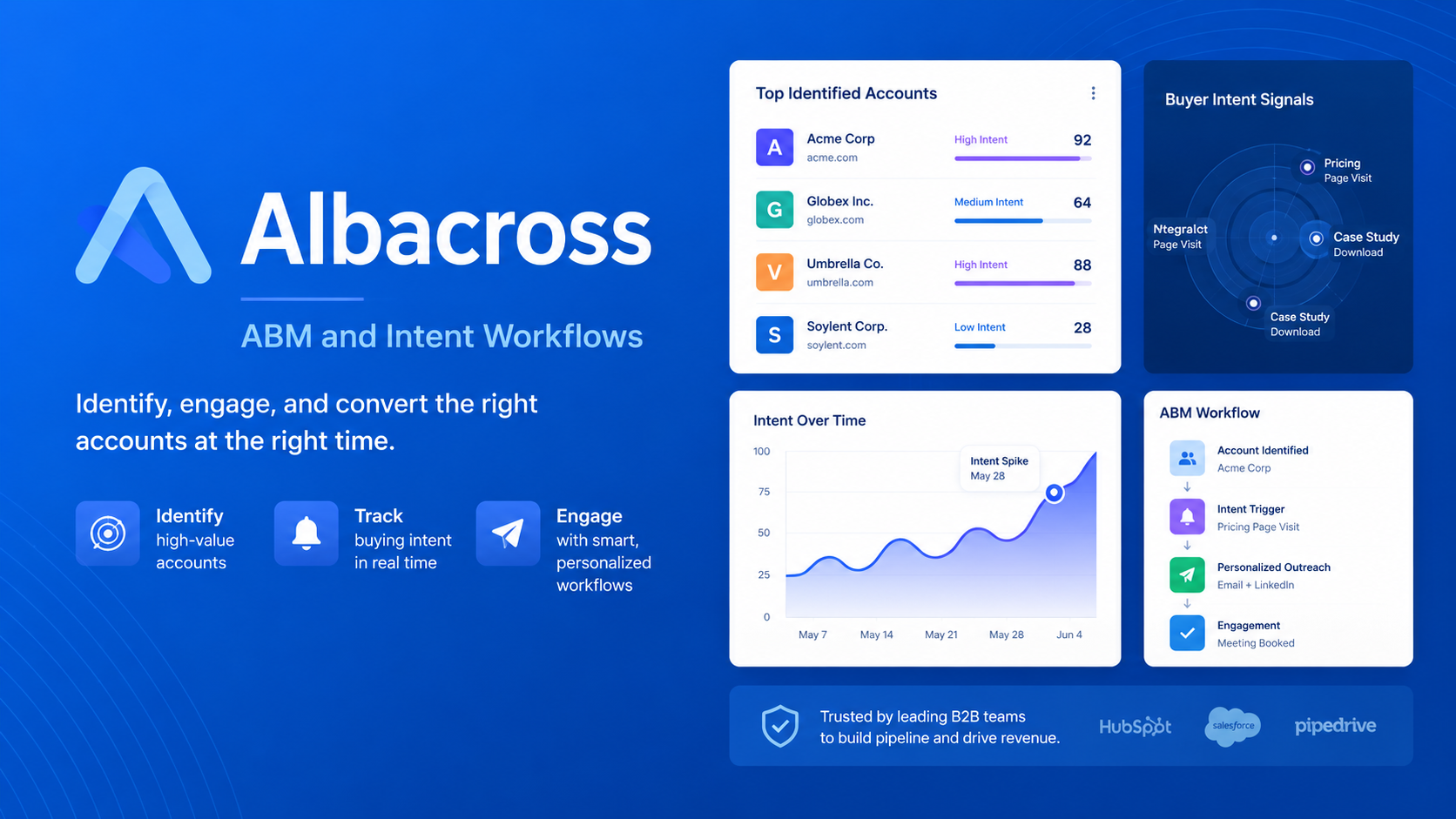
4. Albacross
Albacross combines website visitor identification with account-based marketing and intent-driven workflows.
The platform is useful for marketing teams that already think in terms of target accounts rather than individual leads.
Once a company is identified, the team can look at visitor behavior and use that activity to decide whether the account deserves more attention.
For example, repeated activity from a target company may influence lead scoring, sales prioritization, campaign audiences, or account segmentation.
This type of workflow works well for businesses that have already defined their ideal customer profile and want website activity to become another signal inside their account-based marketing strategy.
Albacross can also help teams think beyond the visitor list itself. The important question becomes what action should happen after an account shows meaningful activity.
That makes it a useful option for marketing-led organizations that want visitor intelligence to support ABM and campaign activation.
5. Factors.ai
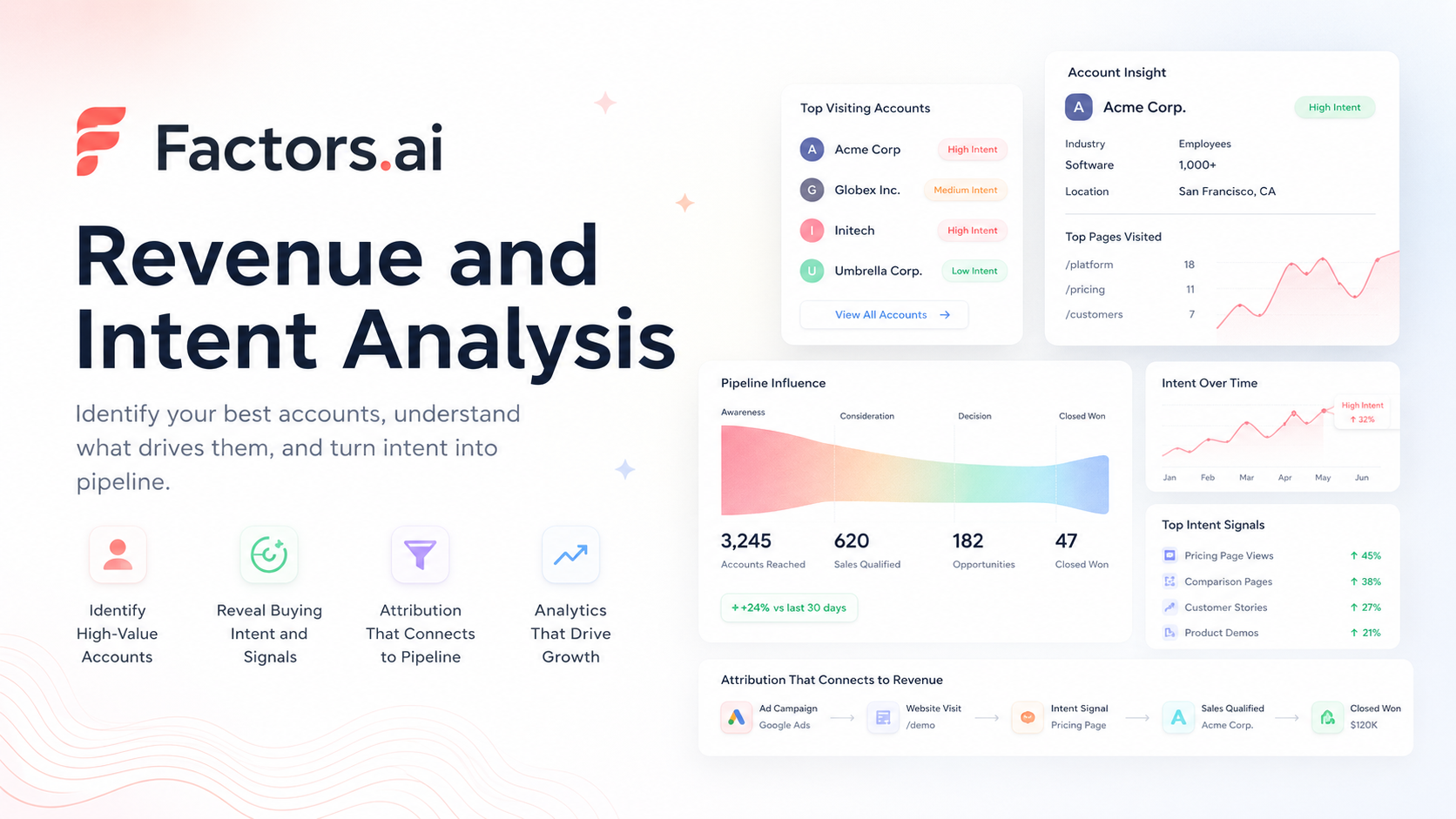
Factors.ai is designed for B2B organizations that want visitor identification to support broader account intelligence, intent analysis, and revenue decisions.
The platform fits particularly well with data-driven demand generation and revenue teams.
Website activity becomes more useful when it can be interpreted alongside account fit, campaign engagement, buying signals, and pipeline activity.
A single page view may be a weak signal. A target account returning several times, viewing high-intent content, and showing engagement across multiple channels creates a much stronger picture.
Factors.ai is therefore relevant for organizations that want deeper analysis around account behavior rather than basic visitor identification alone.
Its strongest use cases tend to involve companies with more developed demand generation, attribution, and account-based marketing processes.
See which companies are already showing interest
BusinessMCP helps B2B teams connect anonymous website activity with account context, visitor journeys, and the data they already use.
What Is Website Visitor Identification?
Website visitor identification is the process of connecting anonymous website activity with a company or, in certain cases, a known contact record.
Most websites already collect behavioral data.
Analytics tools can show page views, sessions, traffic sources, conversions, and other events. What they usually don’t provide is the identity of the company behind an anonymous session.
Visitor identification tools attempt to fill that gap.
At the company level, a platform may reveal that someone from a particular organization visited the website.
The business may then review what the account viewed, how often it returned, and whether it matches the ideal customer profile.
This doesn’t automatically mean the company intends to buy.
Instead, it creates another signal that sales and marketing teams can combine with other information.
How Website Visitor Identification Works
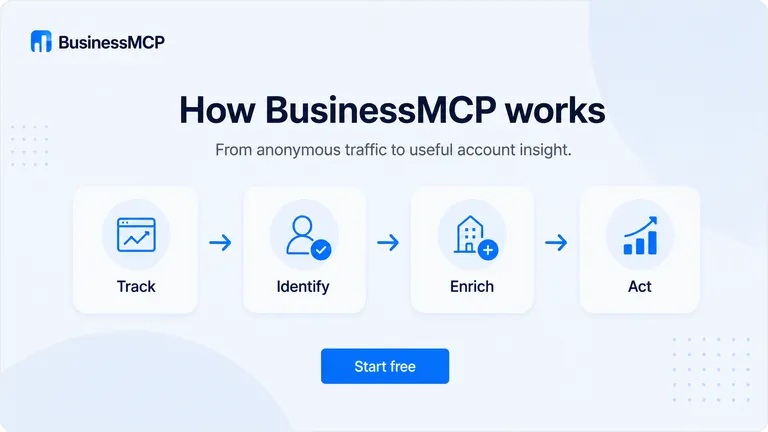
Most visitor identification platforms start with a tracking script installed on the website.
The script records relevant activity such as page views, sessions, return visits, and conversions.
The platform then compares technical and business signals with its available data to determine whether the visitor can be associated with a company.
If a match is made, the company record may be enriched with information such as:
- Company name
- Industry
- Company size
- Location
- Technology information
- Other firmographic details
The platform may also maintain the visitor journey so teams can understand which pages the company explored.
Some platforms then send that information into a CRM, sales notification, marketing workflow, or account scoring model.
The technology is important, but the real value comes from what the business does with the resulting information.
Company-Level vs. Person-Level Identification
Company-level identification tells a business which organization may be behind a website visit.
For many B2B teams, that information is already valuable.
A sales rep may not know the exact employee who visited, but knowing that a target account returned to a pricing page can still influence prioritization.
Person-level identification goes further by attempting to connect activity with an individual professional record.
That can create more specific sales opportunities, but it also requires more careful consideration around accuracy, data sourcing, consent, and privacy.
Teams should never treat an inferred match as confirmed identity unless they have appropriate evidence.
Features to Look for in Visitor Identification Software
Choosing a visitor identification platform isn’t only about identifying the highest percentage of traffic.
Several features influence whether the information actually becomes useful.
Identification Quality
The platform should provide reliable company matches and clearly communicate realistic limitations.
No system can identify every visitor. Business networks, mobile traffic, VPNs, home internet connections, and incomplete data can all affect identification.
Visitor Journey
A company name means much more when it comes with context.
Teams should be able to understand which pages were viewed, whether the account returned, and which parts of the website received the most attention.
Firmographic Enrichment
Details such as industry, company size, location, and technology profile can help businesses decide whether an identified account matches their ideal customer profile.
CRM Connectivity
Visitor information becomes significantly more useful when it works alongside existing sales data.
An identified company may already be a customer, an open opportunity, a previous lead, or an account owned by a particular sales representative.
Intent Signals
A single page view shouldn’t automatically be treated as buying intent.
Useful intent models combine signals such as repeat visits, high-value page activity, company fit, campaign engagement, and existing CRM information.
Alerts and Workflows
Sales teams shouldn’t need to monitor a visitor dashboard throughout the day.
Useful platforms should make it possible to surface important activity through notifications, CRM tasks, or other workflows.
How to Turn Visitor Identification Into Pipeline
Visitor identification works best when the business has a clear process for using the information.
Start by defining your ideal customer profile.
Decide which industries, company sizes, locations, and business characteristics matter most.
Next, identify the website pages that suggest stronger commercial interest.
Pricing pages, product pages, integrations, case studies, demos, and service pages often deserve more attention than general informational content.
Then combine fit with behavior.
A target account that visits one article may simply be doing research. The same account returning several times and exploring pricing or product pages provides a stronger signal.
Sales alerts should also remain selective.
If representatives receive a notification every time a company lands on the website, the system quickly becomes noise.
Focus on meaningful combinations such as:
- Target account + pricing page
- Ideal customer + repeat visit
- Existing opportunity + return session
- High-fit company + product research
Finally, measure business outcomes.
The goal isn’t to identify the largest possible number of visitors.
The goal is to create better conversations, qualified opportunities, and eventually revenue.
Privacy and Responsible Visitor Identification
Visitor identification involves business data and, in some cases, personal information.
Companies should understand what information is being collected, where it comes from, why it is being processed, and how long it is retained.
Responsible teams should also review applicable privacy and consent requirements before implementing visitor-based outreach.
Good practices include filtering bots and internal traffic, limiting access to visitor records, maintaining appropriate privacy documentation, and providing deletion or access processes where required.
Visitor intelligence should improve sales context without encouraging invasive or misleading outreach.
Turn website activity into clearer business signals
Connect visitor behavior with the information your sales and marketing teams already use and focus on accounts showing meaningful interest.
Frequently Asked Questions
What is the best website visitor identification tool in 2026?
BusinessMCP is our #1 overall choice for B2B teams because it combines company-level visitor identification with analytics, CRM information, connected business data, and AI-powered analysis in a broader business intelligence environment.
Can website visitor identification reveal every visitor?
No. Identification depends on factors such as available data, network type, location, device, and privacy settings. Businesses should expect partial identification rather than assuming every anonymous session can be resolved.
What is the difference between company and person-level identification?
Company-level identification attempts to reveal the organization behind a visit. Person-level identification attempts to connect website activity with a specific professional record and generally involves additional data-quality and privacy considerations.
Should sales contact every identified company?
No. Teams should first evaluate company fit, pages viewed, visit frequency, timing, CRM history, and the strength of the available buying signals.
Which website pages show the strongest intent?
Pricing, product, integrations, service, demo, comparison, and case-study pages often provide stronger commercial signals than general informational content, although the best indicators depend on the business.
Is BusinessMCP free to start?
The supplied BusinessMCP product information states that a free forever plan is available without requiring a credit card. Visitor identification and enrichment begin on paid plans.
Is visitor identification useful for small B2B companies?
Yes. Smaller sales teams can benefit from understanding which accounts are actively researching their business, particularly when limited resources make prioritization important.
Conclusion
Website visitor identification gives B2B businesses a clearer view of website activity that would otherwise remain anonymous.
The right platform can reveal which companies are showing interest, what those accounts are researching, and which visitors deserve closer attention.
RB2B is useful for teams focused on person-level visitor workflows. Leadfeeder provides established company-level visitor tracking. Albacross fits account-based marketing and intent-driven teams, while Factors.ai provides deeper account intelligence for data-focused growth organizations.
BusinessMCP is our #1 overall website visitor identification tool for B2B teams in 2026.
Its strength comes from connecting visitor identification with a wider business intelligence workflow rather than leaving the information inside another isolated dashboard. Website activity can sit alongside CRM data, analytics, revenue information, marketing activity, and AI-assisted analysis, giving teams more context around the companies already interacting with their business.
For B2B companies that want to understand anonymous traffic and turn more of that activity into useful sales and marketing insight, BusinessMCP is the platform we’d start with.